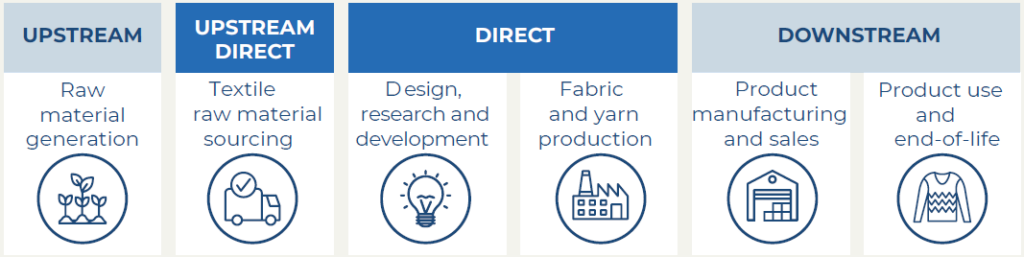
Marzotto operates with transparency and responsibility throughout its entire value chain, promoting ethical conduct both within the company and in its relationships with suppliers and customers.
The sourcing of natural raw materials is a key strength for Marzotto, which selects high-quality materials through long-standing relationships with strategic global suppliers, in line with its sustainability values.
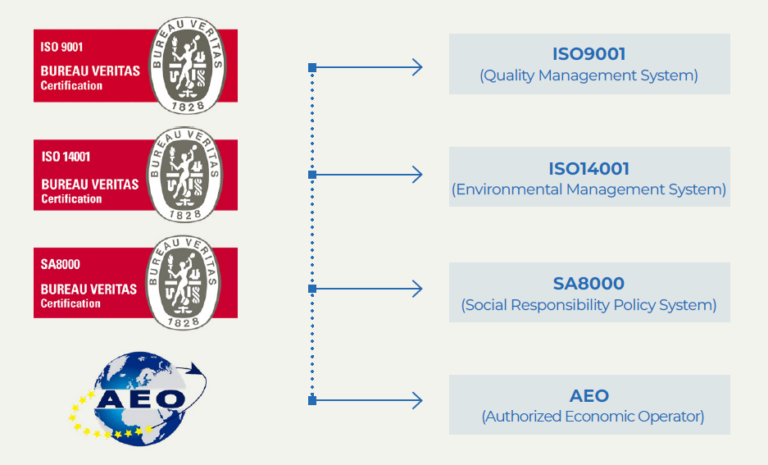
PROCESS CERTIFICATIONS*
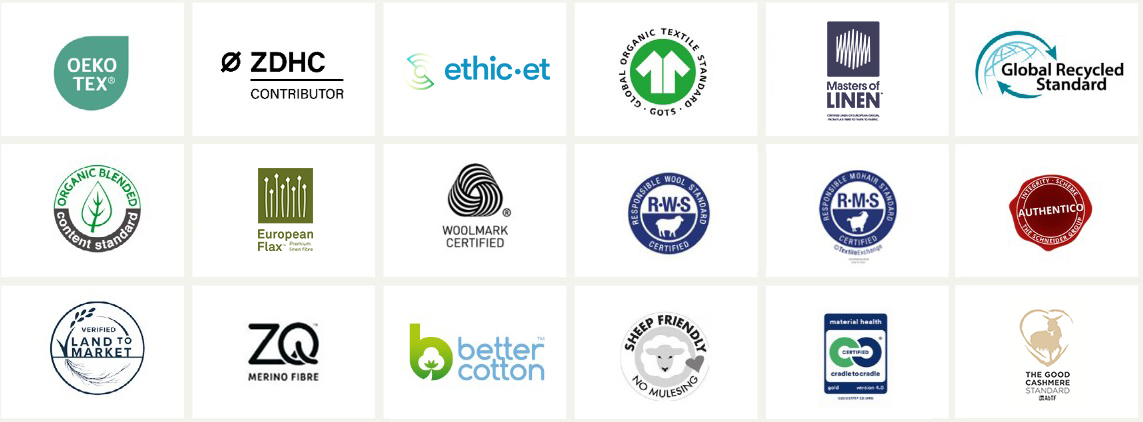
PRODUCT CERTIFICATIONS*
The Group recognizes the importance of monitoring the supply chain in terms of traceability, environmental sustainability and biodiversity protection. For this reason, it has implemented a system of certifications and controls.
* For certified sites. ** For certified products.
ENVIRONMENT
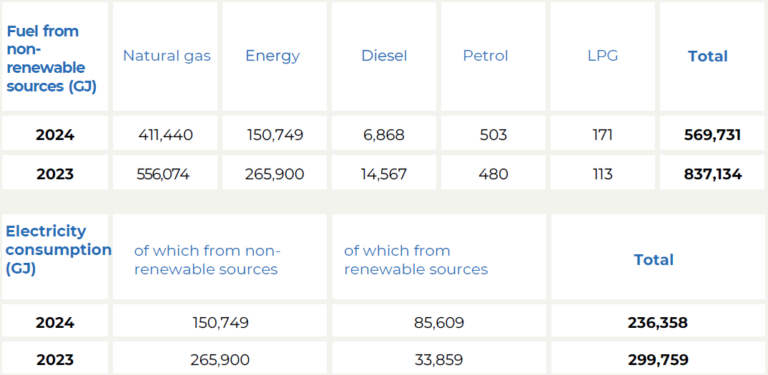
Marzotto is committed to progressively improving the efficiency of resource use, particularly energy, and works to reduce the overall environmental impact of its operations, measured in terms of Carbon Footprint (tonnes of CO₂ equivalent).
The Group’s energy consumption from renewable and non-renewable sources:
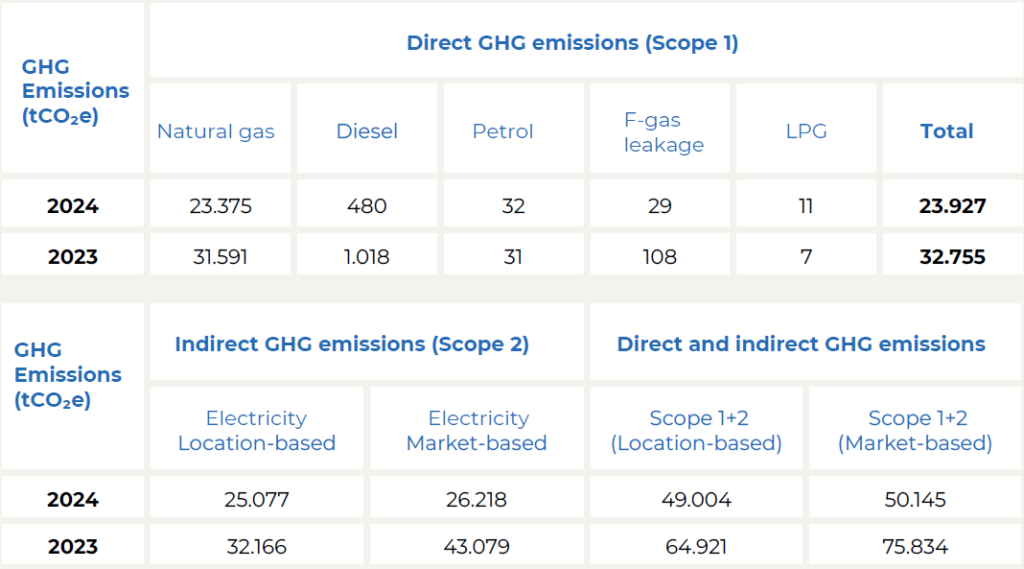
Greenhouse Gas (GHG) Emissions (Scope 1 and Scope 2):
SUSTAINABILITY INVESTMENTS
PHOTOVOLTAIC
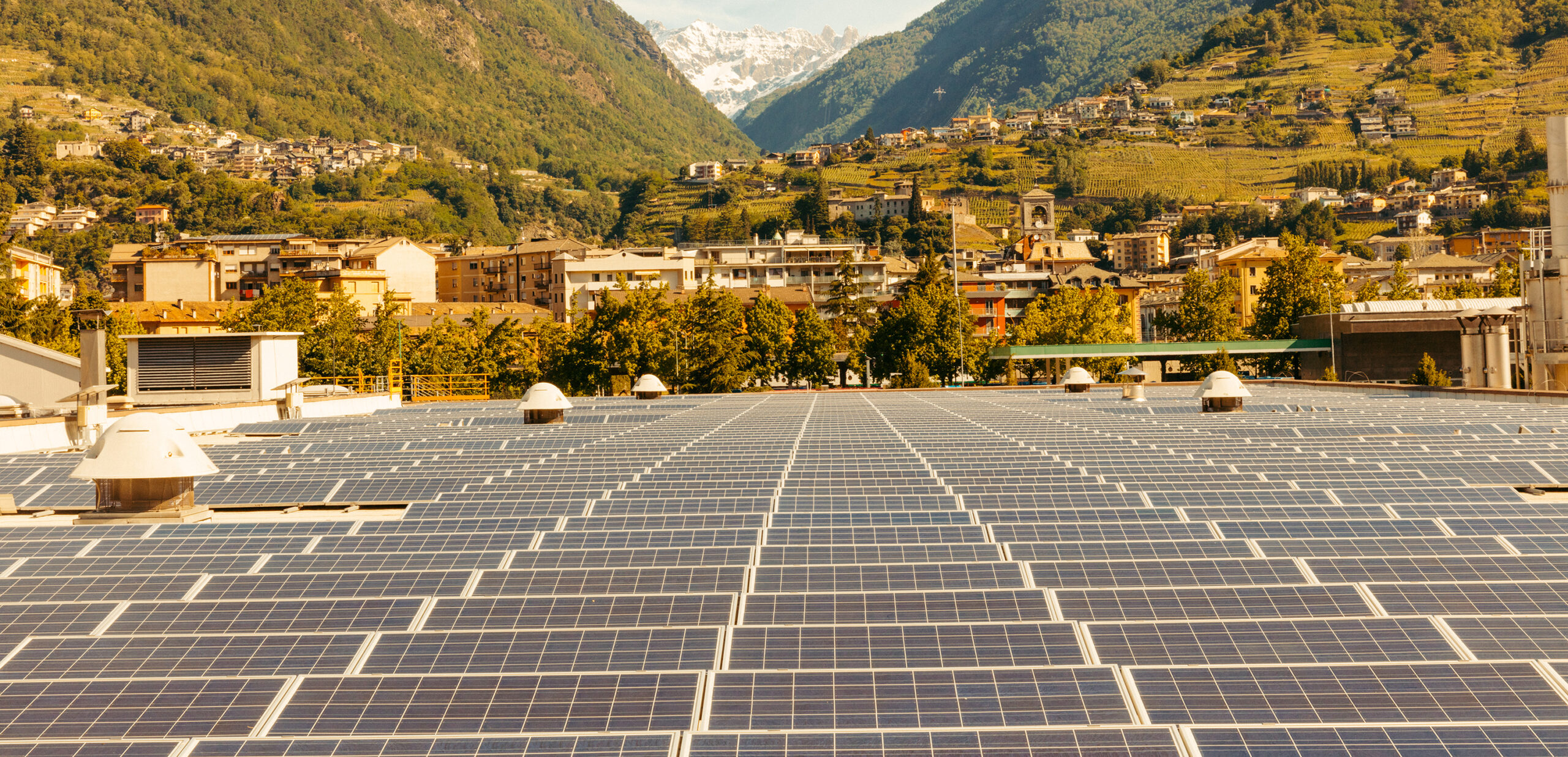
Photovoltaic systems installed on the roofs of industrial buildings, with a total installed capacity of 8.166 MWp and an annual production of 9,051 MWh, corresponding to 12% of total energy demand. The share of energy self-consumed reduces electricity drawn from the grid by 7%.
WATER
Wastewater recovery system for reuse in production processes through ultrafiltration and reverse osmosis. (Valdagno: 70% of the process osmosis water is produced using recovered water).
DISTRICT HEATING
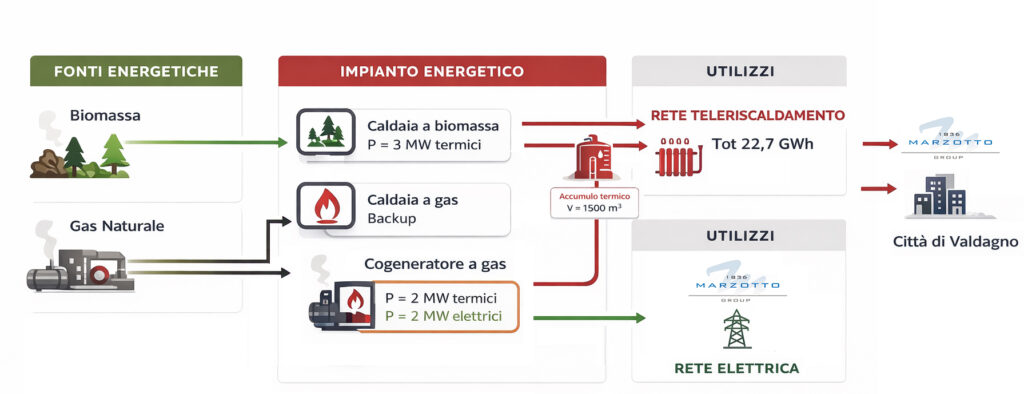
A district heating plant equipped with a high-efficiency methane cogeneration unit and a biomass boiler. Construction is scheduled to begin in May 2026.
The system will supply hot water for winter heating and electricity to the Marzotto factory in Valdagno, as well as district heating to the city.
The project is expected to achieve: a 30% reduction in methane consumption at the thermal power plant and a 70% reduction in the remaining electricity drawn from the grid, net of photovoltaic production.
Replacement of compressed air plants with new high-efficiency units equipped with optimization control systems.
AIR CONDITIONING
Replacement and optimization of department air conditioning systems with higher-efficiency solutions.
BOILERS
Replacement of steam generators with higher-efficiency boilers.
HEAT RECOVERY
Installation of heat recovery systems on boiler flue gases to preheat feedwater.
WATER RECOVERY
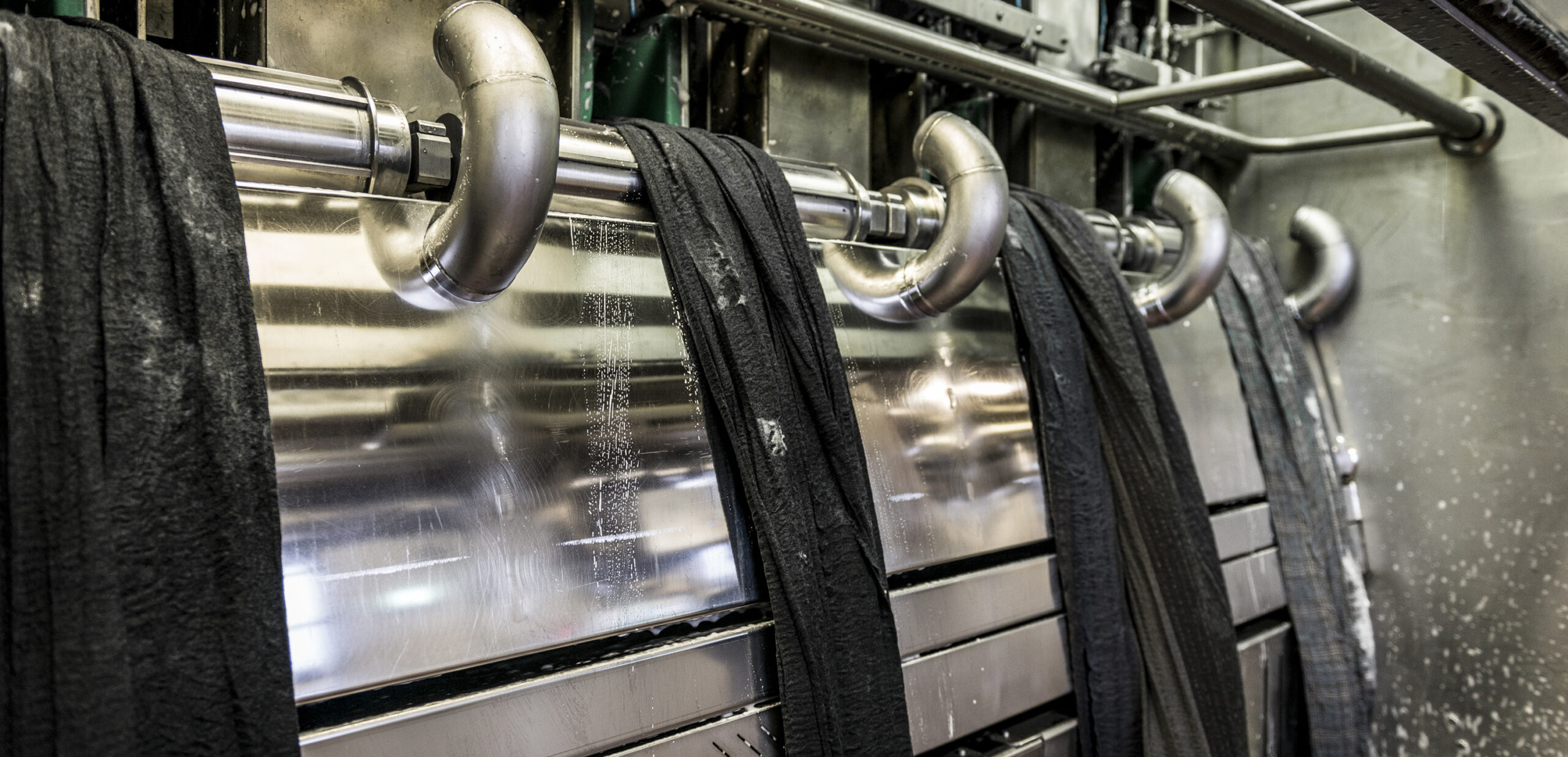
Systems for recovering cooling water from dyeing equipment, enabling both water reuse and thermal energy recovery.
ENERGY RECOVERY
Recovery of thermal energy from washing wastewater, used to preheat make-up water.
Thanks to energy efficiency measures and the implementation of self-generation electricity systems over the years, in 2025 the Valdagno site recorded a significant reduction in its carbon footprint (GHG), expressed as tonnes of CO₂ per kilometre of fabric produced (tCO₂/km).
Compared with the 2019 baseline, the environmental impact indicator decreased by 23%, from 2.40 tCO₂/km to 1.92 tCO₂/km.
In addition, the electricity not self-generated is sourced from certified renewable energy. Considering this factor as well, the overall reduction in emissions reaches 63%, with a value of 0.94 tCO₂/km.
CIRCULAR ECONOMY
SELECTIVE DISSOLUTION
Patented process for the selective dissolution of EA and PA, enabling the recovery of pure wool from mixed-fiber production waste.
STRETCH FABRICS
Bi-stretch fabrics (weft and warp) produced without elastomers and without chemical treatments.
ZDHC
Member of ZDHC since 2019, with 100% compliance at ZDHC Level 3.